Introduction
Quitting smoking or vaping often feels like navigating a maze with no map. You know you want to change, yet cravings arrive unexpectedly, schedules clash, and old habits creep back in. The good news: a personalized plan that fits your life can make the difference between another failed attempt and real progress. A clear roadmap reduces decision fatigue and keeps you moving forward when motivation dips.
This guide helps you build a practical, step-by-step plan you can actually follow. It focuses on realistic goals, actionable strategies, and a simple way to measure progress so you can see results over time—not just intentions.
Build Your Plan: Step-by-Step
Step 1 — Define your goal and product type
Decide if your main goal is to monitor and reduce or to quit completely.Specify what you’re aiming to quit (cigarettes, vaping, or both). Different products have different triggers and withdrawal patterns, so a clear scope helps tailor your plan.Write down your why: health, money saved, family, or other personal reasons. A concrete motive strengthens your commitment.Step 2 — Set a target timeline and plan duration
Pick a realistic target date (for example, 8–12 weeks) and outline milestones along the way.Break the timeline into phases: Week 1–2, Week 3–4, and so on, with small, achievable changes each phase.Step 3 — Capture your baseline usage and cost
Note your current daily usage: cigarettes per day or puff count per day for vaping.Estimate weekly spending on the habit and the monthly savings if you cut back. Seeing money saved can be a strong motivator.Example: If you smoke 10 cigarettes a day, that’s about 70 per week. If each cigarette costs a few dollars, you’ll notice a sizable weekly difference when you cut back or quit.Step 4 — Identify triggers and plan coping strategies
List common triggers: wake-up moments, coffee breaks, after meals, stress, social settings, or boredom.For each trigger, map a substitute behavior (hydration, quick walk, deep breaths, a piece of fruit, or a short meditation).Build a “craving wallet” of techniques you can pull from when the urge hits.Step 5 — Choose a concrete strategy: reduction or quit
If reducing: set gradual targets (e.g., reduce by 25% each week) and extend the plan duration as needed.If quitting: set a fixed quit date and plan to remove cigarettes or vaping devices from your routine before that date (including avoiding high-risk times).Both paths work better with support and a clear tracking system.Step 6 — Create your support network
Tell a trusted friend or family member about your plan and ask for accountability.Consider joining a support group or pairing with an “urge buddy” who understands the journey.Schedule regular check-ins to review progress and adjust the plan.Step 7 — Prepare your environment
Remove obvious triggers: cigarette packs, lighters, vape devices, and flavors that tempt you.Create a tobacco- or vape-free zone at home and in your car.Stock healthier alternatives for moments of craving (water, gum, mints, healthy snacks).Step 8 — Choose tools and resources that fit you
Use simple tracking: a daily log of usage, cravings, and success moments.Consider evidence-based aids if appropriate (nicotine replacement therapies, non-nicotine medications, or behavioral strategies) after talking with a clinician.Be mindful of caffeine, alcohol, and stress management—these can influence cravings.Step 9 — Build in micro-goals and track progress
Set tiny daily goals (e.g., “no smoking before lunch” or “one smoke-free hour after waking”).Celebrate small wins: days smoke-free, reduced craving intensity, or money saved.Review progress weekly and adjust the plan accordingly.Step 10 — Plan for slips and keep momentum
Slips happen. Instead of self-criticism, analyze what led to the slip and reinforce your plan.Update triggers, coping strategies, and support contacts based on what you learned.Return to your timeline and milestones with renewed intention.Practical tips and examples
Craving management: practice urge surfing—notice the urge, ride it out for 3–5 minutes, and then let it pass.Delay technique: when you feel an urge, wait 10 minutes and do a different activity; most cravings fade in time.Substitutions: sip water, chew gum, take a brisk 5-minute walk, or do a quick stretch when cravings hit.Track savings: jot down how much you’d save each week; see the financial motivation accumulate over time.Social scripting: prepare a short, honest response for social settings (“I’m cutting back to feel better and save money.”) to reduce pressure.Monitor progress and stay flexible
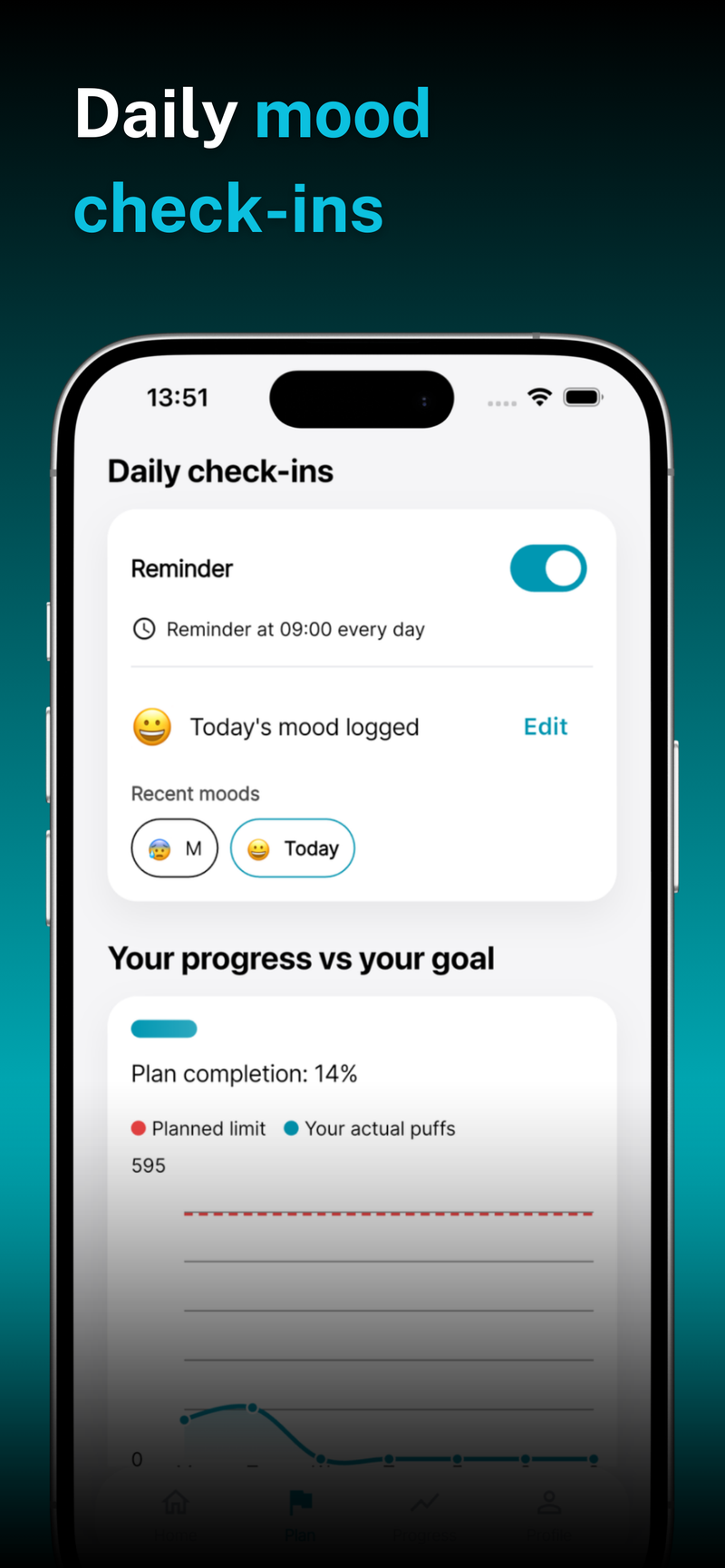
Keep a simple daily log of usage, triggers, and mood. A quick 1–2 minute check-in each day beats infrequent long reviews.Do a weekly review: which strategies helped most, what surprised you, and what to adjust next.If you’re not making the progress you hoped, tweak the timeline, add a new coping strategy, or seek additional support.Conclusion
Building a personal quit smoking plan is about clarity, small wins, and steady adjustments. By defining your goal, mapping triggers, and planning concrete coping strategies, you can reduce decision fatigue and increase your odds of lasting change. If you’d like a guided onboarding experience that helps you customize these elements—from choosing your product type to setting a timeline and monitoring progress—a tool with dedicated onboarding and personal setup features can support this journey.
For many people, tailored support makes the difference between a fleeting attempt and a sustainable change. If you’re curious, Quit Smoking & Vaping can help with this kind of onboarding and personal setup, guiding you through a structured path toward your goals.