
How to Set Micro-Goals that Sustain a Smoke-Free Life
Struggling to quit smoking or vaping? Learn how to turn quitting into a series of tiny, repeatable goals. Build a personal, measurable plan that fits your daily life and steadily moves you toward a smoke-free future.
Introduction
Quitting smoking or vaping isn’t just about mustering willpower in a single moment. It’s about reshaping daily routines, spotting triggers, and building a tiny, repeatable system that works even when cravings strike. If you’ve tried before and felt overwhelmed, you’re not alone. The missing piece is often smaller, consistent steps you can actually follow. By framing your journey as a series of micro-goals, you can turn a daunting mission into a sequence of manageable days.
Health-wise, the payoff can be meaningful and fast. For example, within 24 hours of abstaining, heart rate and blood pressure begin to normalize. Within two weeks to a few months, circulation and lung function improve, making daily activities feel easier. After about a year, the risk of coronary heart disease drops by roughly half compared with a continuing smoker. These improvements come from steady, incremental progress rather than a single dramatic leap.
Design micro-goals that last
Start small and be specific
Tiny, concrete targets beat vague resolutions. Instead of “quit smoking,” try:
Make goals measurable
Count what you’re changing. Keep a simple log for a week:
When you see the numbers, you’ll know what’s working and where to adjust.
Create a realistic timeline and milestones
Break a longer plan into weekly micro-goals. For example:
A gradual timeline reduces stress and builds confidence as the days add up.
Tackle triggers with small changes
Triggers are predictable patterns: coffee breaks, after meals, or riding in the car. Small adjustments can blunt their impact:
Make your environment one step ahead
Set up your space to support micro-goals:
Use your money as motivation
Track how much you’d typically spend on cigarettes or vapes weekly. Convert that amount into a small, tangible goal—e.g., “Save $20 this week by not smoking and treat myself to something meaningful at month’s end.” Seeing the financial impact reinforces the habit change.
Build accountability and celebrate wins
Accountability helps motivation stay high:
Plan for slips—and respond quickly
Slip happens. The key is to bounce back fast:
Measure progress in practical terms
Beyond days smoke-free, track small, meaningful metrics:
These measures reinforce that progress is real, even when cravings linger.
Example: a simple 6-week micro-goal roadmap
Measuring progress and staying motivated
Micro-goals work because they are repeatable, visible, and adjustable. The research behind habit formation suggests that consistent, small changes become automatic over time, especially when you see tangible results like better sleep, more energy, and money saved.
Conclusion
Building a smoke-free life starts with tiny, repeatable steps that fit your daily rhythm. By defining specific micro-goals, tracking them, and adjusting as needed, you can create a sustainable path to reduced use or complete cessation. The process is as important as the outcome, and the daily momentum matters more than a single moment of willpower.
If you’d like a guided start, Quit Smoking & Vaping can help with this. Its Onboarding & Personal Setup provides a friendly introduction and a multi-step plan to tailor a quitting or reduction journey to your life, including choosing your goal, setting a target timeline, and logging your daily usage. This focused support can help you build a personalized quit plan that fits your routines and ambitions, leveraging Fokus Puff – User-Facing Features to keep you advancing confidently.


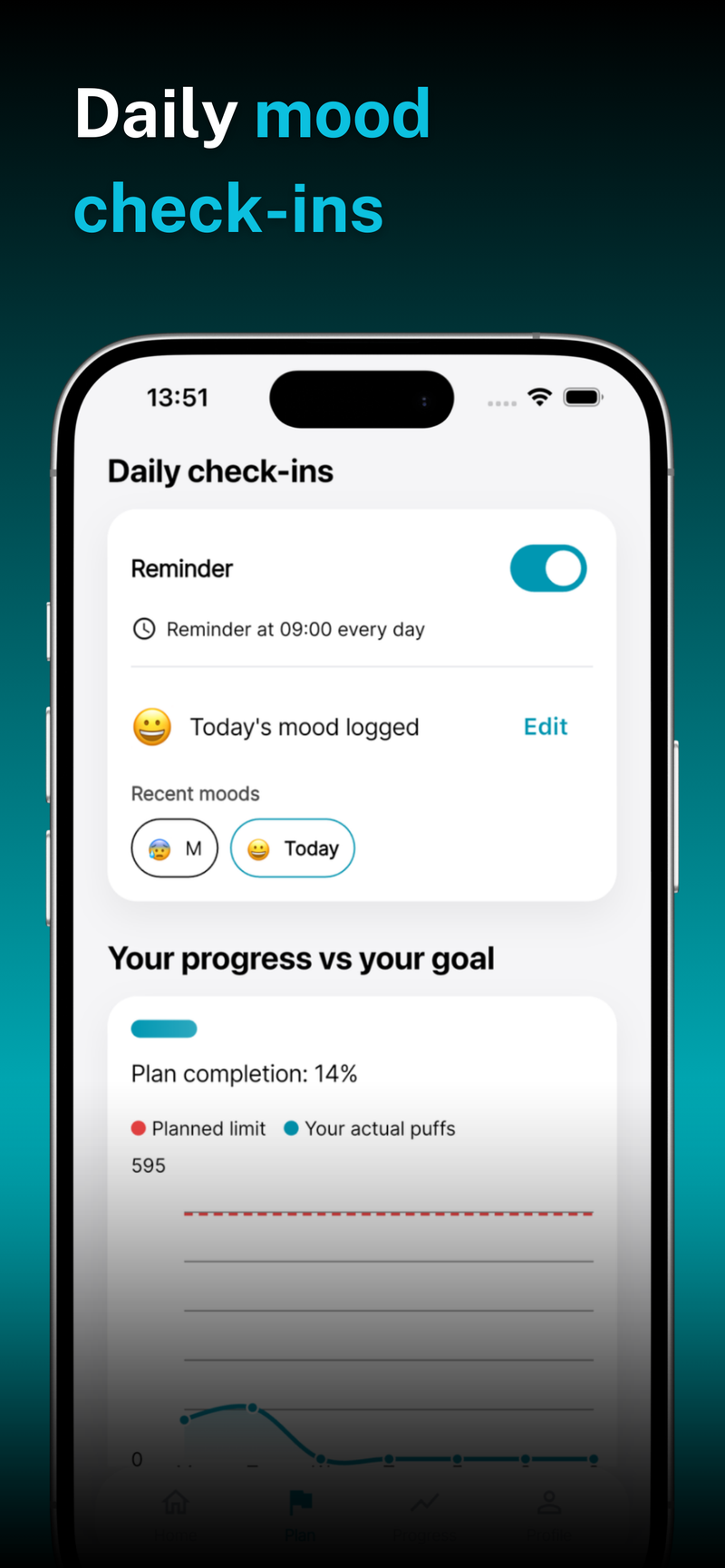

💪 Onboarding & Personal Setup