Quit Smoking

Quit Smoking

Your journey to freedom

·Health

Identify Your Nicotine Triggers: A 4-Week Strategy

Cravings about nicotine often follow clear patterns. This four-week plan helps you map triggers, build coping strategies, and redesign routines so you can quit or reduce smoking and vaping more effectively. A practical, evidence-informed approach you can start today.

smoking cessationvapinghabit changequit planself-help

Introduction

Cravings don’t just happen out of nowhere. For many people trying to quit smoking or vaping, cravings come tied to routines, emotions, or particular settings—like a morning coffee, finishing a meal, or being with friends who vape. The good news is you can outsmart those cues with a clear, four-week plan that helps you identify triggers and build reliable strategies to handle them.

Think of this as a road map you can tailor to your life. It’s practical, doable, and focused on real change rather than sheer willpower.

Four-Week Trigger Strategy

Over the next four weeks, you’ll map triggers, test coping skills, and redesign routines so nicotine stops feeling automatic. Cravings typically peak within minutes and can last five to ten minutes; with the right tools, you can ride them out and move on. Research shows that many quit attempts fail in the first week, but structured coping strategies can improve your odds over time.

Week 1: Identify Your Triggers


  • Start a trigger diary for seven days. Record: time, location, activity, mood, people around you, and your urge rating on a 0–10 scale.

  • Look for patterns. Do you crave after meals, when stressed, or during social gatherings? Are certain environments (car rides, certain rooms, or coffee shops) linked to urges?

  • Create trigger categories. Common groups include emotional triggers (stress, anger, sadness), situational triggers (meals, breaks, travel), social triggers (being around others who smoke/vape), and nicotine cues (the sight, smell, or ritual of using).

  • Example patterns help you build a map. If you notice that coffee and a morning cigarette go hand in hand, you’ve identified a plan-worthy cue.
  • Tip: Cravings aren’t a sign of failure—they’re a signal to use a prepared strategy. A study-leaning takeaway is that recognizing triggers early is one of the strongest predictors of staying quit later on.

    Week 2: Build Your Coping Strategies


  • Create a personal toolbox with at least 8–12 options you can use in different moments. Quick examples:

  • Delay and breathe: a 2-minute rule plus a 4-7-8 breathing cycle.

  • Hydration and a quick snack: water flavored with lemon; a crunchy apple.

  • Physical activity: a brisk 3-minute walk or a few jumping jacks to break the urge.

  • Oral substitutes: sugar-free gum, mints, or a straw for a breath-action substitute.

  • Mindfulness: a 1-minute body scan to notice tension and release it.

  • Social reframe: call or text a friend to shift the moment.

  • Practice urge surfing. When the urge hits, acknowledge it without judgment, ride it for 5–10 minutes, then reassess. Most urges fade even if you don’t quit cold Turkey.
  • Tip: Pair each trigger with at least one go-to coping strategy. If you know you’ll face a specific cue (e.g., finishing a meal), you’ll already have a plan in place rather than reacting impulsively.

    Week 3: Change Your Environment and Routines


  • Reduce cue visibility. Put away smoking/vaping gear, lighters, and empty packaging where you don’t see them first thing in the morning.

  • Alter routines that accompany triggers. If you always vape during a drive, schedule a different activity for that route (podcast, phone a friend, or a short stretch break).

  • Prepare “If-Then” plans. Example: If I feel stressed at work, then I take a 5-minute walk and drink water; if I’m with friends who vape, I join a non-vape activity or choose a different meetup location.

  • Build a supportive environment. Tell trusted people about your plan so they can help you stay accountable, especially in social situations.
  • Tip: Small environmental changes can dramatically reduce the frequency and intensity of cravings by breaking automatic cue-response loops.

    Week 4: Lock It In and Prevent Relapse


  • Review your trigger map and update it with new insights from weeks 1–3.

  • Strengthen your relapse plan. Decide in advance how you’ll respond to high-risk scenarios (stress, celebration, loneliness).

  • Practice ongoing urge surfing. When a strong urge hits, use a quick toolkit sequence: pause, breathe, choose a coping strategy, log the moment, and repeat.

  • Set realistic milestones. Celebrate one-week, two-week, and 30-day marks as proof your plan is working.
  • Key mindset: Mistakes happen. The goal is to resume without judgment and with your toolbox ready. Regular reflection helps refine your plan for future triggers.

    Additional Tips and Practical Steps


  • Use a simple craving scale. Rate urges 0–10 and track which triggers tend to spike you. This helps you anticipate and disrupt high-risk moments.

  • Pair habit changes with tangible rewards. After a week of successful coping, treat yourself to something you enjoy that doesn’t involve nicotine.

  • Stay hydrated and sleep well. Poor sleep and dehydration can intensify cravings and appetite for nicotine.

  • Get moving. Even short bursts of activity release endorphins and reduce the perceived strength of cravings.

  • Seek support. A buddy system or support group can provide accountability and encouragement when urges feel overwhelming.
  • If you’re ever unsure about your approach, remember that quitting is a process with ups and downs. Consistency—more than intensity—drives long-term success.

    Conclusion

    Identifying nicotine triggers and building a practical, progressive plan gives you concrete control over cravings. By documenting patterns, developing coping strategies, reshaping environments, and reinforcing your plan, you’ll create a reliable framework to quit or reduce gradually. The most powerful part is that you’re not fighting cravings in the moment alone—you’re shifting the pattern that feeds them.

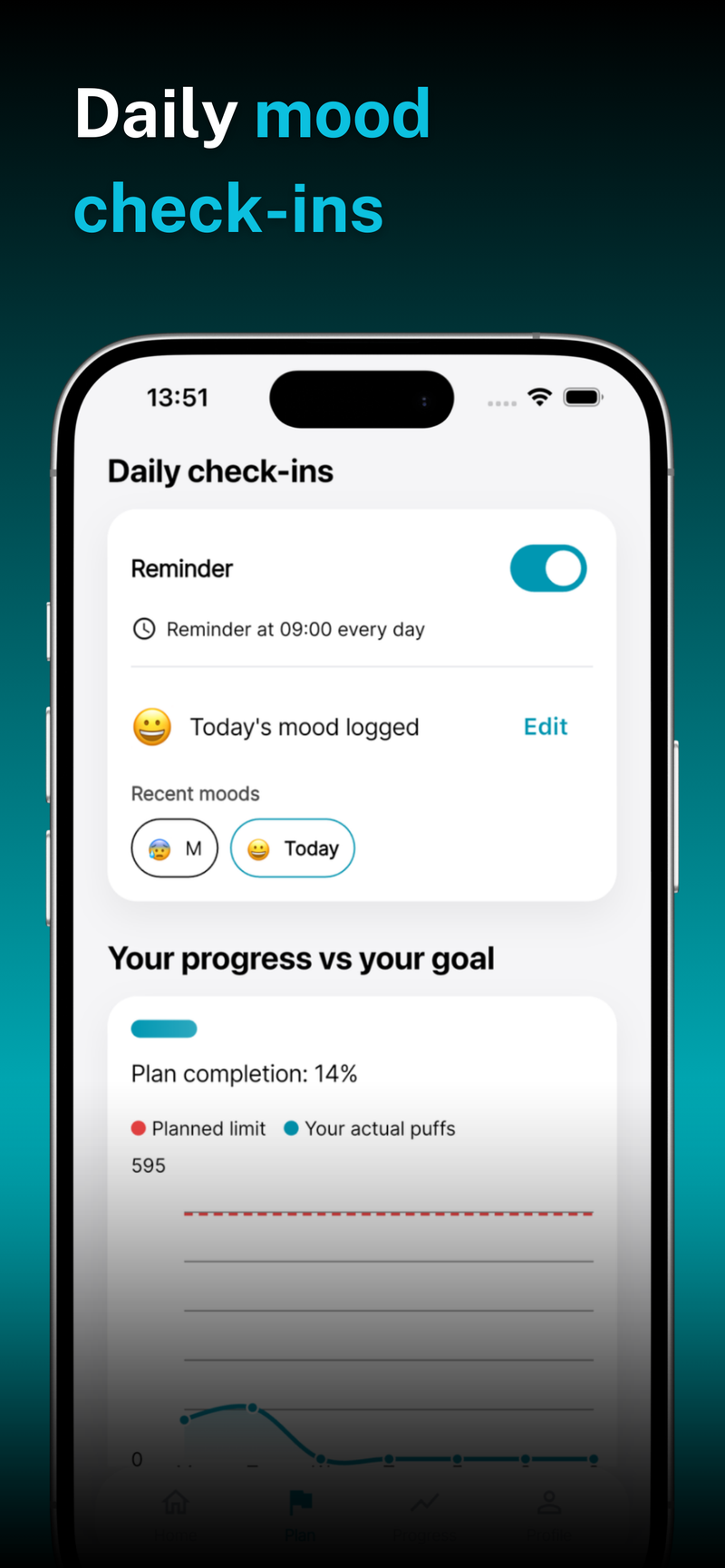
    If you’re looking for a guided onboarding experience and a personalized plan tailored to your triggers, Quit Smoking & Vaping can help with this. Its onboarding and personal setup features are designed to help you map your triggers, choose your quit or reduction goal, and stay on track with a plan that fits your life.

    Quit Smoking icon

    Quit Smoking

    Your journey to freedom

    Free • In-App Purchases
    GET
    Dashboard
    Progress
    Health
    Savings
    Motivation
    Stats
    Daily MotivationProgress TrackingHealth MilestonesMoney Saved

    💪 Onboarding & Personal Setup

    Related Articles

    Quit Smoking

    Your journey to freedom