Quit Smoking

Quit Smoking

Your journey to freedom

·Health

Map Triggers and Build a Coping Plan That Works Effectively

Trigger mapping helps you understand cravings and take control. Learn practical steps to identify triggers, map them to coping strategies, and build a personal plan you can actually follow.

smoking cessationvaping cessationbehavioral changehabitsself-help

Introduction


Have you ever tried to quit smoking or vaping and felt overwhelmed by cravings that seem to come out of nowhere? You’re not alone. Cravings often spike in response to triggers you may not even notice during a busy day. The good news is that by mapping your triggers and building a practical coping plan, you can reduce the power these triggers have over you—and increase your chances of lasting change.

Understand triggers


Triggers are events, thoughts, or feelings that set off a craving. They can be:
  • Internal: stress, fatigue, low mood, caffeine crashes

  • External: places you associate with smoking, people who smoke, routines like after meals or during breaks

  • Routine-based: commuting, scrolling social media, finishing a task

  • Sensory cues: the sight or smell of smoke, the feel of a cigarette or vape device in your hand
  • Naming these triggers helps you prepare for them rather than react impulsively.

    Map your triggers


    Mapping is a simple two-step process: observe and categorize, then plan.

    Step 1: Track triggers for 2 weeks


    Keep a simple log each time you crave a cigarette or a vape hit. Use these fields:
  • Trigger (situation or mood)

  • Time of day

  • Context (where you are, who you're with)

  • Urge level (1–10)

  • Coping tried

  • Outcome
  • A quick daily review helps you see patterns you might miss in the moment.

    Step 2: Find patterns and categorize


    Look across your log and group triggers into common categories, such as:
  • Social triggers: being with others who smoke/vape

  • Stress or疲労 triggers: deadlines, arguments, long workdays

  • Routine triggers: after meals, during coffee breaks, before bed

  • Environment triggers: seeing packs, hanging out in smoking areas
  • Having categories makes it easier to build targeted coping plans for each type.

    Step 3: Create clear if-then plans


    Turn each trigger into a concrete plan. Use this template:

    If [trigger], then [coping strategy] and [fallback action].

    Examples:

  • If I finish a meal and crave a cigarette, then I’ll drink water, brush my teeth, and take a 5-minute walk.

  • If I’m with friends who smoke, then I’ll step away for a few minutes or suggest a non-smoking activity.

  • If I feel stressed at work, then I’ll do 4 minutes of box breathing and a quick stretch.
  • Build a coping plan that sticks


    A practical plan combines a small toolbox of strategies you can reach for in the moment.

    Your coping toolbox


  • Delay tactics: count to 60, then decide if you still want it.

  • Substitution: sugar-free gum, mint, or a flavored water sip.

  • Deep breathing or urge surfing: observe the urge as a wave and let it pass.

  • Movement: a quick walk, stairs, or a brief stretch break.

  • Grounding techniques: name 5 things you can see, 4 you can touch, 3 you can hear, 2 you can smell, 1 you can taste.

  • Environment tweaks: keep cigarettes and vaping devices out of sight, set a smoke-free zone in your home or car.
  • Plan framework: choose your goals and timeline


    1) Pick your main goal: monitor & reduce or completely quit.
    2) List your triggers and the corresponding 1–2 coping strategies for each.
    3) Set a realistic timeline (e.g., 4–12 weeks) and plan for high-risk days.
    4) Rehearse real-life scenarios in a calm moment so you’re ready when cravings hit.
    5) Track progress and adjust—what works for you may change over time.

    Real-world tips and data to help you stay the course


  • Cravings often peak within the first few minutes and fade after about 5–10 minutes. If you ride out that window, you’re more likely to choose differently.

  • Relapse is most common soon after quitting. Preparing for high-risk moments makes a big difference.

  • Visualize savings: if you used to spend $40–$60 a week on smoking or vaping, reducing or quitting can quickly free up money for healthier goals.

  • Small wins compound. Even a single week without a craving can reinforce your plan and boost confidence.
  • Common pitfalls and how to avoid them


  • All-or-nothing thinking: slips happen. Reframe a slip as data, not defeat.

  • Underestimating social pressure: have a go-to excuse or plan to exit situations gracefully.

  • Too many triggers at once: start with 2–3 high-risk categories and expand your plan gradually.

  • Overcomplicating the plan: keep it simple and actionable; you’ll stick with it longer.
  • Conclusion


    Mapping your triggers and building a practical coping plan is a skill you can develop with practice. Start by logging cravings, spotting patterns, and turning them into simple if-then decisions you can act on in the moment. With consistency, your cravings can lose their grip—and your confidence can grow.

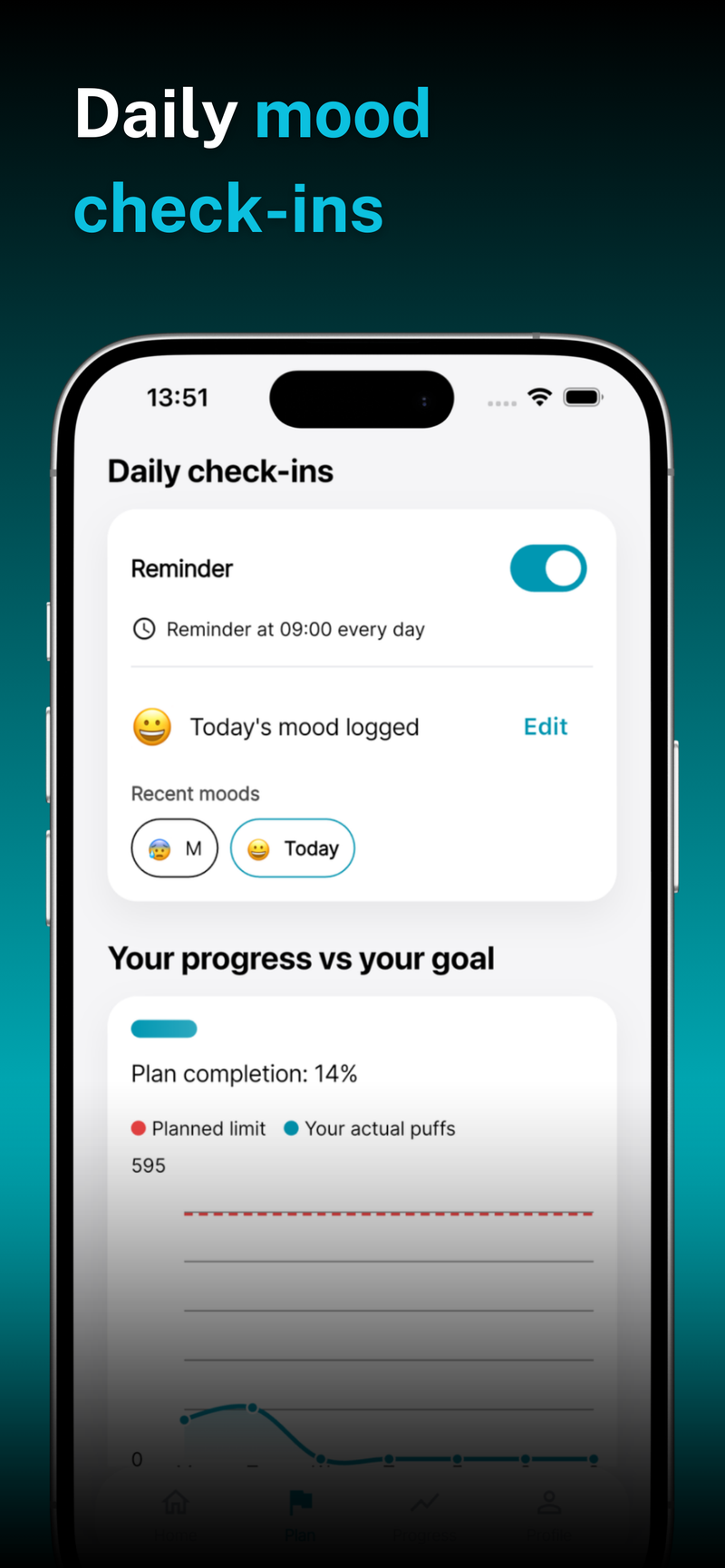
    If you’re looking for a guided way to implement this process, consider a structured onboarding and personal setup that walks you through choosing your quit or reduction goals, setting a timeline, and tracking daily usage. This kind of framework can help you stay accountable and adapt as you progress. Quit Smoking & Vaping can help with this, leveraging its onboarding & personal setup features to support your journey toward a healthier habit.

    Quit Smoking icon

    Quit Smoking

    Your journey to freedom

    Free • In-App Purchases
    GET
    Dashboard
    Progress
    Health
    Savings
    Motivation
    Stats
    Daily MotivationProgress TrackingHealth MilestonesMoney Saved

    💪 Onboarding & Personal Setup

    Related Articles

    Quit Smoking

    Your journey to freedom