
·Health
Maximizing Savings: Quitting Nicotine Reduces Your Costs
Quitting nicotine isn’t just healthier—it can be financially transformative. Learn practical steps to estimate your costs, cut spending, and build a savings plan as you reduce or quit smoking or vaping.
smoking cessationfinancial planningcost savingshabits and behaviorhealth and finance
Introduction If you’ve decided to quit smoking or vaping, you’re already taking a powerful step for your health. But there’s another practical win you can unlock almost right away: the money you stop spending on nicotine. The cost isn’t just the price of a pack or a bottle; it’s the recurring expense you pay every day, week, and month. If you’re curious about how much you could save and how to turn those savings into lasting motivation, you’re in the right place. ## The true cost of nicotine ### Direct costs you can quantify - Cigarettes: At roughly $6–$7 per pack and about one pack per day, you’re looking at about $42–$49 per week, or around $2,184–$2,555 per year. - Vaping: E-liquids, coils, and devices vary, but a moderate vaper can spend hundreds of dollars a year. For example, a 30 ml bottle every week or two, plus coils, can easily run in the low hundreds annually. ### Hidden costs that add up - Time and attention: Cravings interrupt work, workouts, and sleep, which can indirectly affect productivity and energy. - Health costs: Even modest smoking or vaping can raise medical costs over time, from doctor visits to medicines and tests. - Hidden daily expenses: lighters, snacks, and social activities around smoking or vaping can quietly push totals higher. ### Quick way to estimate your personal costs 1) Determine your daily usage (cigarettes per day or number of puffs per day for vaping). 2) Note your local price per unit (price per pack or price per ml). 3) Multiply to weekly and yearly totals. Examples to illustrate: - Smoking: 1 pack/day at $6.50 → roughly $42/week and about $2,184/year (42 × 52). - Vaping: 2 ml per day with $0.75/ml (roughly $1.50/day) → about $10.50/week and around $546/year. If your numbers look like “a few hundred dollars a year” or more, you’re already looking at meaningful potential savings once you change the habit. ## Practical strategies to cut costs while you quit or reduce ### 1) Start with a spending map - Keep a two-week log of every nicotine-related purchase and the number of cigarettes or puffs. - At the end, total the weekly spend and average daily usage. - Set a realistic reduction target (for example, reduce daily usage by 25% in two weeks). ### 2) Create a dedicated savings fund - Open a separate “quit fund” (physical jar, digital wallet, or bank envelope). - Each time you resist a craving or cut back, drop the equivalent amount you would have spent into the fund. - Use the fund for a healthy reward (movie night, new sneakers, a day trip) after you hit milestones. ### 3) Tackle triggers with healthier substitutions - Identify situations that trigger use (morning coffee, after meals, social events). - Swap in alternatives: water, tea, a quick walk, or a 5-minute breathing routine. - Keep healthy snacks handy to reduce the urge to reach for a cigarette or vape. ### 4) Build a gradual reduction plan (instead of cold turkey for everyone) - Week 1: reduce by 25% of your daily usage. - Week 2: reduce another 25% of the original level. - Week 3: target a total daily reduction of 50%. - If full quit feels too abrupt, continue stepping down every 1–2 weeks until you reach zero. ### 5) Change the routine, not just the habit - Change locations or times of day you smoke or vape. - Add a quick physical activity break after cravings (a short walk or a few push-ups). - Rework social triggers: if friends smoke together, plan alternative activities that don’t center on nicotine. ### 6) Lean on social support and accountability - Tell a friend or family member your plan and share progress weekly. - Consider joining a support group or seeking professional guidance if cravings feel unmanageable. ### 7) Plan for cravings with a practical toolkit - Hydration and snacks (low-sugar options) help reduce cravings. - Deep breathing: inhale for 4 seconds, hold for 4, exhale for 6. Repeat 5 times. - Distraction: a quick task—emptying the dishwasher, a short walk, or a 5-minute stretch. ## Seeing the payoff over time - Short term (days to weeks): you’ll notice your spending drop as you cut back. The money you save starts to accumulate quickly. - Medium term (1–3 months): better breath, more energy, and a growing sense of control around cravings; the financial cushion grows further. - Long term (6–12+ months): the annual savings can be substantial, and you’ve built stronger health and financial habits that stick. ## Real-world examples and a simple plan - Example A: A smoker who spends about $2,100/year may end up saving roughly $350–$450 in the first month by cutting back 25% and then sustaining it. In a year, that compounds into clear, meaningful savings. - Example B: A daily vaper who spends about $350–$600/year could reduce costs by shifting to lower usage, shopping for sales, and substituting non-nicotine routines during peak craving times, leading to ongoing savings. A practical, repeatable plan is what sticks: track, cut, substitute, and reward yourself. The financial benefit reinforces the health benefits, which in turn strengthens your resolve to stay quit or reduce further. ## The bigger picture: health, finances, and motivation Quitting nicotine improves lung function and circulation over weeks, lowers heart rate and blood pressure, and reduces the risk of nicotine-related illnesses. When you combine health gains with tangible cost savings, you create a powerful, personal incentive to stay on track. ## Conclusion: a structured path can make the difference If you’re looking for a structured way to plan this out, a guided onboarding and personal setup can help you map your quit or reduction journey—from choosing your product type (cigarettes or vapes) to setting a main goal (monitor & reduce or quit), selecting a target timeline, and estimating weekly costs. A clear plan helps you stay focused and accountable as you build real savings. Tip: Consider trying a program that emphasizes


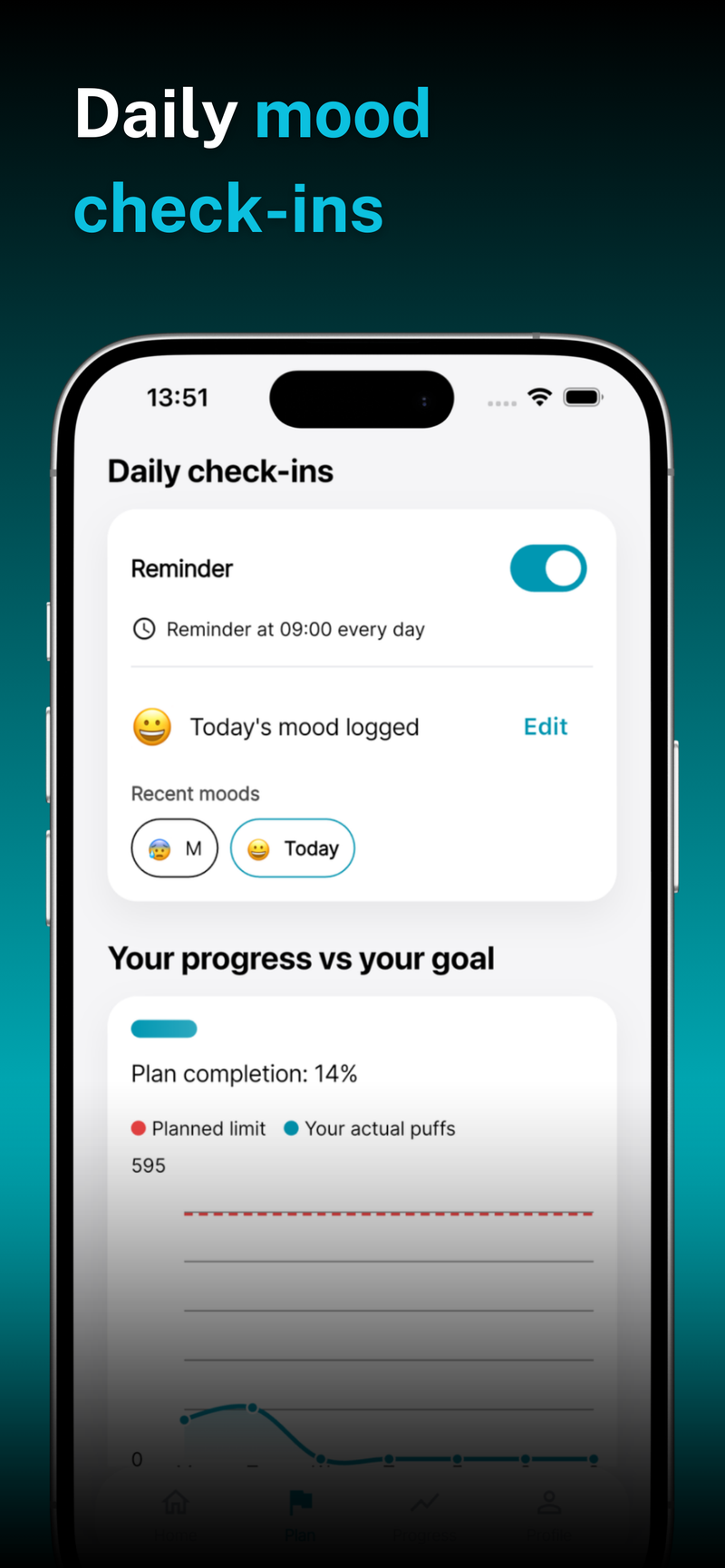

Daily MotivationProgress TrackingHealth MilestonesMoney Saved
💪 Onboarding & Personal Setup