
·Health
Smart Budget Hacks to Quit Smoking and Save More Today
Struggling to quit smoking or vaping? Learn practical, budget-focused strategies to cut costs, curb cravings, and build a sustainable plan. From cost audits to micro-goals and supportive routines, discover actionable steps you can start today to save money while you quit.
smoking cessationbudgetinghealthcost savingswellness
Introduction You’re not alone if you’ve decided to quit smoking or vaping—and you’re not crazy for feeling a pinch at the cash register when cravings hit. The money you’re currently spending on cigarettes or puffs is real, and turning that expense into a clear savings goal can be a powerful motivator. The average smoker in the United States spends roughly $2,000–$3,000 per year on cigarettes, depending on location and brand. If you’re serious about quitting, you can flip that spend into a resource for your health and your wallet. This article is about practical, budget-minded tactics that respect the difficulty of quitting while giving you tangible steps you can take today. You’ll find simple audits, sustainable goals, and proven habit-change ideas you can actually stick with. ## Main Content ### H2: Start with a real cost picture 1. Track your daily spend for one week - Record every cigarette or puff you buy, plus any vaping liquids, snacks, or lighters. This gives you a concrete baseline. - At the end of the week, multiply by four to estimate monthly costs. 2. Translate spend into a quitting fund - Decide on a weekly savings target. For example, if you currently spend $35 per week on cigarettes, aim to set aside at least $35 as a “quit fund” for a few weeks. - Visualize the payoff: a 3-month fund could cover a vacation, a gym membership, or a small emergency stash for weeks when withdrawal feels tough. 3. Set a realistic quit or reduction timeline - Choose a primary goal: monitor & reduce, or quit completely. - Pick a target timeline that suits your life (e.g., 6–12 weeks). Break it into small milestones (weekly reductions or a taper pace). ### H2: Build a practical budget around your goal - Create a simple budget template: income, essential expenses, then “tobacco/file cost” as a line item you’re aiming to shrink. - Decide what happens to the money saved. A dedicated jar, a digital savings account, or a monthly transfer to a health fund helps reinforce the habit. - Add a contingency line: withdrawal symptoms or cravings can squeeze the budget. A modest reserve prevents you from slipping back. ### H2: Manage cravings without breaking the bank - Hydration and hot beverages: water, tea, or coffee can curb the urge to puff when you’re bored or stressed. - Low-cost substitutes: sugar-free gum, crunchy veggies, or minty lozenges can satisfy oral fixes with far less cost than a pack. - Delay tactic: when a craving hits, implement a 5-minute delay. In that window, distractions (a quick walk, a call with a friend) reduce the chance you’ll cave. - Nicotine management, on a budget: if you use nicotine replacement therapy or other aids, compare prices and look for generics or store-brand options. Small savings add up quickly. ### H2: Make your plan stick with small, repeatable wins - Micro-goals, big impact: reduce daily puffs by 20% in week one, 40% in week two, then aim for full quit by week six. - Use a cue-based routine: pair a craving with a fixed alternative (e.g., after meals, drink water first, then take a short walk). - Track progress publicly or with a buddy: sharing milestones can increase accountability and reduce relapse risk. ### H2: Create a supportive environment - Remove reminders: empty where you keep lighters, vape devices, and favorite cigarette spots. Replace with things that support your goal (water bottle, stress ball, healthy snack stash). - Recruit allies: tell friends, family, or coworkers about your plan. Simple encouragement or a check-in reduces the feeling of isolation during tough days. - Plan for high-risk moments: after meals, during drives, or when socializing often trigger cravings. Have a pocket list of quick actions for each scenario. ### H2: Make data work for you - Review weekly results: how much money did you save? How many fewer cravings did you feel? Use the data to adjust your approach, not to shame yourself. - Celebrate consistency, not perfection: every smoke-free day or reduced puff count is progress. Small wins compound into bigger health and financial benefits over time. - Stay curious: if a particular strategy stalls your progress, switch to another tactic for a couple of weeks and reassess. ### H2: Quick-start plan you can implement this week 1) Do a 7-day cost audit and tally weekly spend on tobacco products. 2) Open a dedicated quit fund and set a weekly savings target. 3) Choose a primary goal: reduce or quit, and set a firm timeline. 4) Identify 2-3 craving-management techniques that are inexpensive (water, tea, gum, distraction). 5) Eliminate one trigger environment (e.g., remove lighters, empty vape pods) and replace with a healthy habit. 6) Find a buddy or accountability partner for weekly check-ins. 7) End each day by logging cravings, savings, and mood to spot patterns. 8) Weekly celebrate small wins with a non-food reward that supports your plan. 9) Review your progress mid-point and adjust your targets if needed. 10) Remember your why: health improvements and financial gains are powerful motivators when cravings spike. ## Conclusion Quitting or reducing smoking and vaping is both a health choice and a smart financial move. By turning every craving into a chance to save, you create a practical loop of motivation: fewer cravings, more savings, better health, and real momentum toward your goal. If you’re looking for a structured way to tailor this journey to your situation, consider a guided onboarding approach that helps you create a personalized quit or reduction plan. A well-designed onboarding flow can help you choose your product type, set a main goal, pick a target timeline, and enter your current daily use and weekly spending—bringing clarity to the path ahead. In particular, onboarding that emphasizes a clear, personalized setup can be a powerful first step toward lasting change. This kind of approach aligns your budget with your quit/ reduction strategy, making the process feel achievable rather than overwhelming. Promoting a p


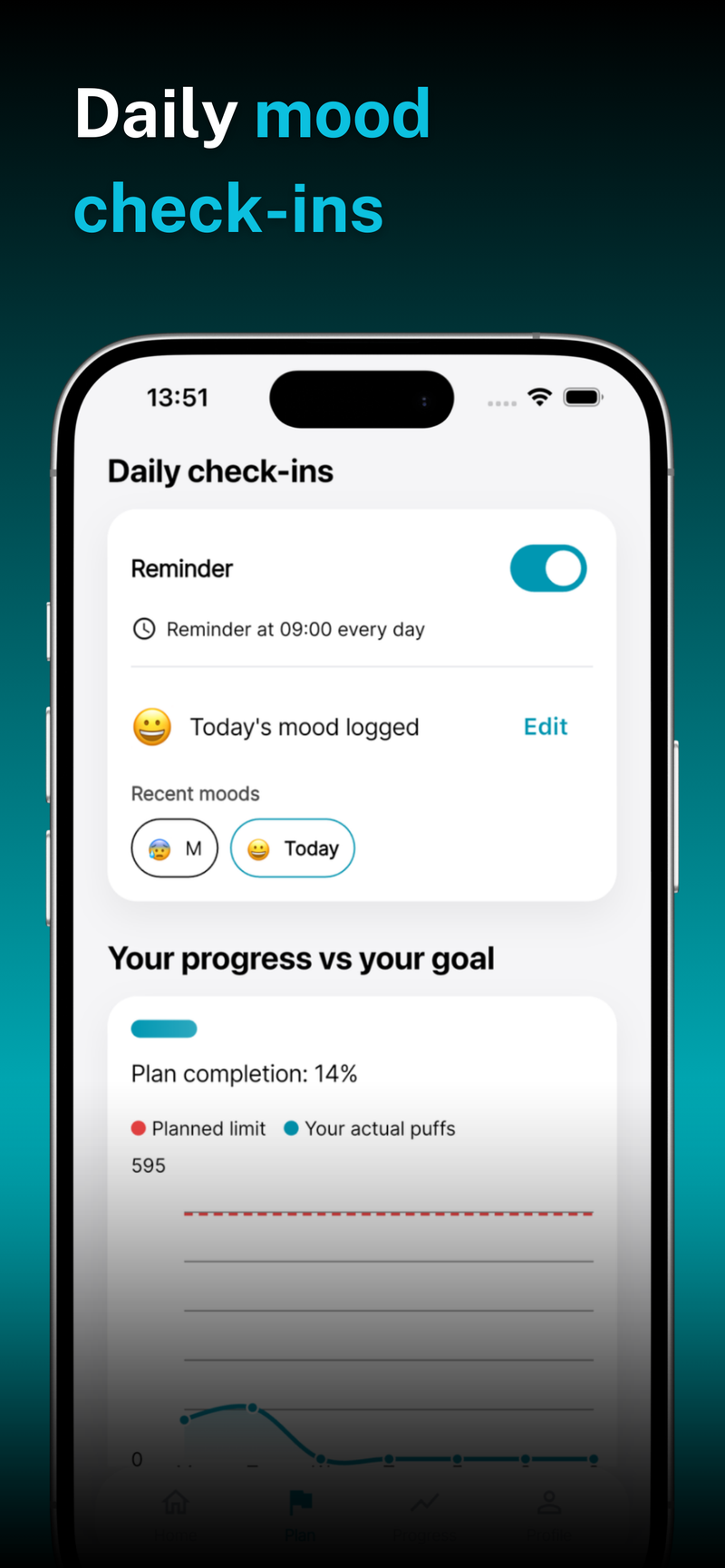

Daily MotivationProgress TrackingHealth MilestonesMoney Saved
💪 Onboarding & Personal Setup