
·Health
Turn Urges into Savings: Financial Quit Motivation
Cravings come with a hidden price tag. Learn practical, money-minded strategies to turn urges into savings, making quitting smoking or vaping more doable and rewarding. A simple plan, tracked costs, and smart substitutions can help you reach your goals without feeling deprived.
smoking cessationfinancial wellbeingbehavior changeurge managementbudgeting for health
Introduction Cravings don’t just test your willpower — they also come with a hidden price tag. Each puff or cigarette can feel like a small economic withdrawal, taking money, time, and energy you could be using toward something you actually want. If you’ve ever thought, “I’ll quit when I’ve saved enough,” you’re not alone. The good news is you can flip that script: use urges as reminders of your financial goals and build a concrete plan that makes quitting and saving feel doable. ## The price tag on cravings ### Put a price on each craving A simple way to visualize urges is to translate them into dollars. If you smoke a typical pack per day and a pack costs about $7–$9 (prices vary by state), you’re looking at roughly $49–$63 per week. That compounds to about $200–$260 per month and $2,600–$3,100 per year. If you vape, costs depend on device type, coils, and nicotine strength, but a cautious estimate is still in the hundreds of dollars per month for many users who vape daily. The actual amount isn’t as important as recognizing the pattern: urges convert to spending very quickly, often without you noticing. ### Track urges to reveal your patterns - Keep a one-week urge diary: note the time, trigger, location, and the amount you would have spent. - At day’s end, tally the potential weekly spend from urges you avoided or postponed. - Look for clusters: morning coffee, after meals, social events, or stress triggers. These are the moments you’ll want to address first. Tip: you don’t need fancy tools — a notebook or a simple note on your phone works. The goal is to make the cost visible so your brain starts to associate cravings with a real consequence. ### Translate urges into savings goals - Use a separate savings target for cravings avoided: e.g., if you typically spend $8 per day on a pack, and you avoid 5 urges today, you’ve saved roughly $4 (assuming roughly half your usual cravings are avoided). Over a week, that adds up. - Set incremental targets: 1) week one, avoid 2–3 urges per day; 2) week four, reach a daily reduction of 25–40%; 3) week eight, push toward complete cessation or a steady reduction. This approach does more than save money — it trains your brain to value the reward of quitting as highly as the reward of lighting up once was. ## Practical strategies to turn urges into savings ### Delay, distract, and decide - Delay the urge for 10–15 minutes. Odds are the craving will fade or shift in intensity. - Distract with a quick task: 5-minute walk, a glass of water, a quick chore, or a short phone call with someone supportive. - Decide with your future self in mind: ask, “If I give in now, what am I sacrificing later?” ### Substitutions and routines - Have quick substitutes ready: sugar-free gum, mint, or a flavored water. For vaping, switch to a lower-nicotine option or a non-nicotine alternative during critical moments. - Build a ritual around your trigger times. If your morning coffee is a trigger, pair it with a ritual that doesn’t include smoking or vaping—stretch, a short walk, or a breathing exercise. ### Environment helps, not hinders - Remove or reduce triggers in your space: empty lighters, ashtrays, or vape devices out of sight. - Create protective zones: a no-oral-habit zone at home or work to reinforce the new behavior. ### Journal urges and money flow - Each time you feel a craving, write down where you are and which urge you’re dealing with. - After a craving is avoided, log the amount you would have spent and where that money will go (savings, a small treat, or an investment toward a goal). ### Build a simple, trackable plan - Decide your main goal: monitor & reduce or quit completely. - Set a target timeline: a realistic path that avoids overwhelming you. - Log your daily usage and cravings to review in a short weekly check-in. ## Make the savings tangible ### Visualize progress, celebrate small wins - Create a weekly savings chart and color in how many urges you avoided. - Use the money you’ve saved toward concrete goals: a trip, a gadget, an emergency fund, or a simple cushion for unexpected expenses. ### Create meaningful, non-food rewards - Small rewards for milestones (e.g., a new book, a hobby item, a massage) reinforce the habit of saving and staying quit. - Keep long-term goals in sight: every saved dollar is a step closer to your larger life goals, whether that’s fitness, travel, or financial stability. ### Use automation to keep momentum - Set up automatic transfers to a savings account or a “quit fund.” Even small, regular deposits compound over time and reduce friction when you feel an urge. - Regularly review the plan and adjust targets to stay motivated as cravings fluctuate. ## Build a plan that fits you ### Decide quit or reduce, and pick a plan length - If quitting feels daunting, start with a clear reduction plan for 4–8 weeks, then reassess. - If you’re ready to quit, pick a target date and work backward with weekly milestones. ### Create a daily log that’s easy to maintain - Record usage, triggers, and savings at the end of each day. - Use a simple scoring system (0–5) to rate craving intensity and note what helped most. ### Seek support and accountability - Tell a friend or family member about your plan. A quick text check-in can boost your adherence. - Consider a support group or a cessation workshop if you find accountability helpful. ## The numbers behind the idea (why this works) Turning urges into savings forces both sides of the same coin to align: your behavior and your finances. Seeing the potential annual savings in dollars can reframe cravings as investment decisions rather than reflex actions. Over time, the daily discipline builds a stronger identity around being someone


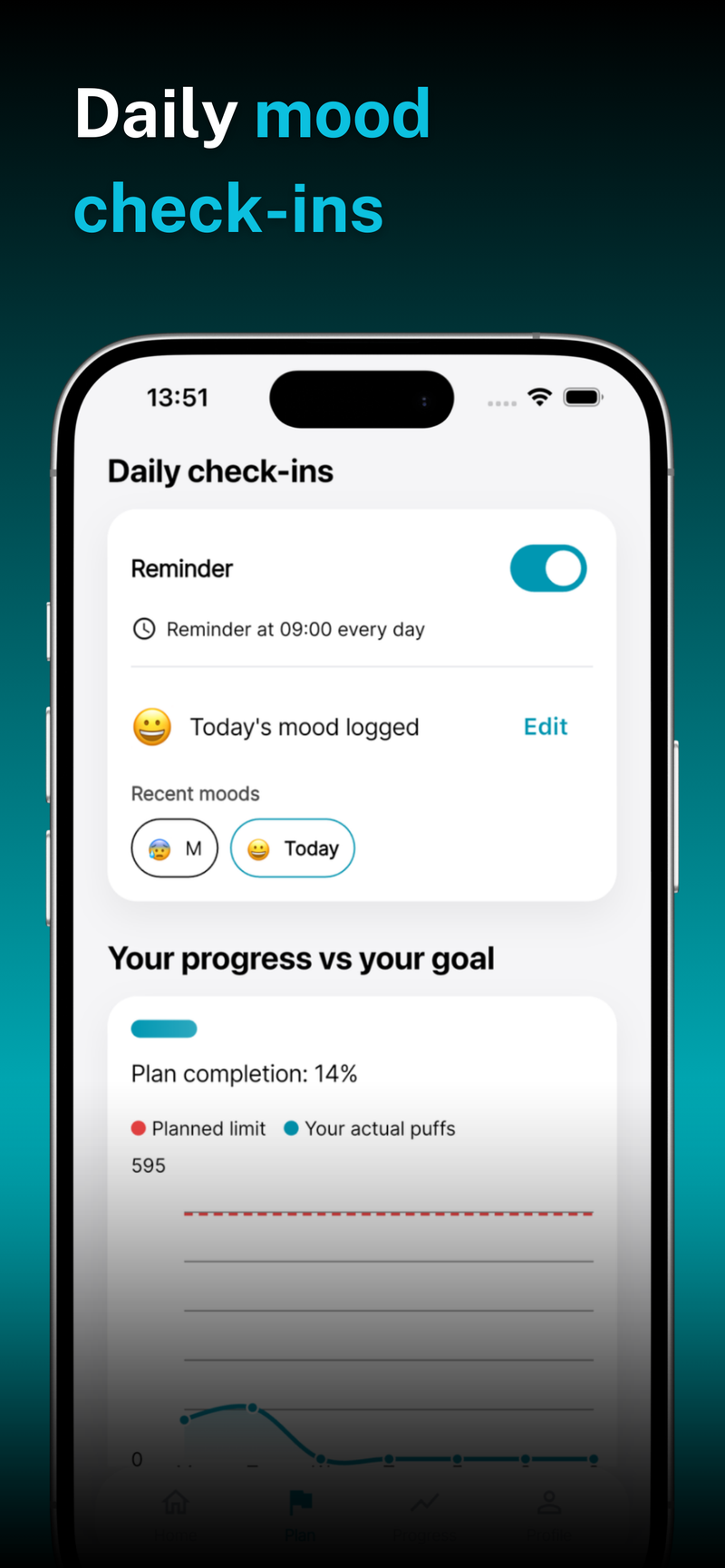

Daily MotivationProgress TrackingHealth MilestonesMoney Saved
💪 Onboarding & Personal Setup